


DOLPHIN SURGICAL Dolphin Surgical Industries stipulated in Thane District — 401105 INDIA. Our entire product is very systematically catalog for easy reference, Identification in order to maintain a high degree of quality & reliability, We have t...
- (+91) 7700933367
- dolphininstruments@hotmail.com
- Office No. 27 - 28, Ravi Raj Industries, Near Janseva Sahakari, Behind Dharam Kanta, Phatak Road, Bhayander East, Thane: 401105,, Mira Bhayandar, Maharashtra, India. 401105
© 2020 dolphin instruments. All Rights Reserved

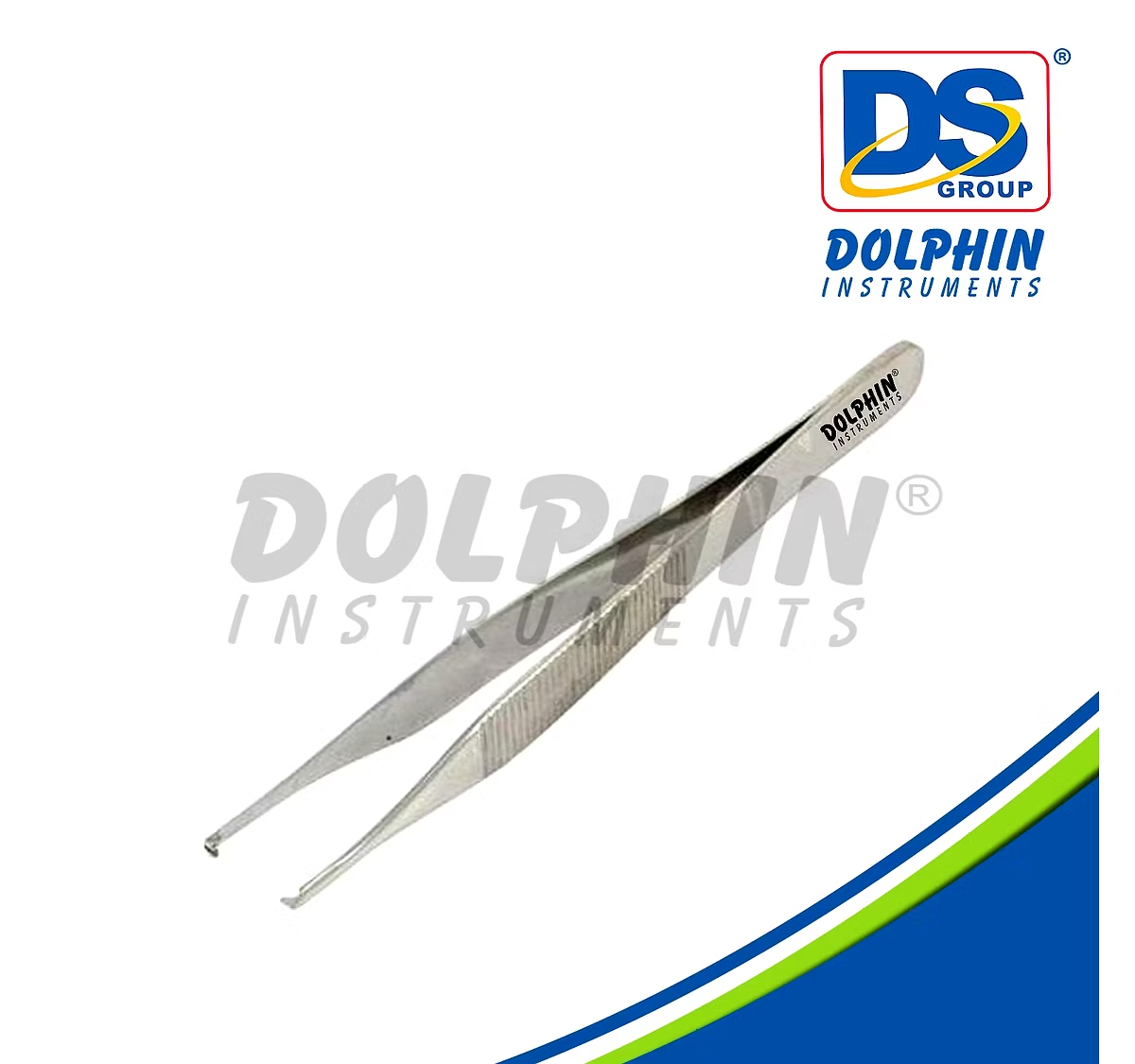
DISSECTING FORCEPS TOOTH 5''
SKU: GSI-00a408
ITC-HSN: 90189023
1.00 / Numbers
1.00 / Numbers
Inclusive of all taxes
You Save: 0. Discount: 0%
-
Product is not available
Minimum Enquiry Quantity 10 Numbers
Country of origin : India
Toothed dissecting forceps are used to firmly grasp, manipulate, and retract tough tissues like skin and fascia during surgical procedures. Their serrated teeth prevent slippage, allowing for precise control while handling tissues, and they can also be used to help manipulate needles and clamp larger blood vessels.
- Tissue manipulation: Securely grasps and holds tough tissues, which reduces the risk of damage to surrounding structures.
- Surgical procedures: Used in various surgeries, including general surgery, orthopedic, plastic, ENT, and neurosurgery.
- Clamping vessels: Can be used to clamp large blood vessels to stop bleeding.
- Instrument handling: Helps to manipulate needles and other instruments during an operation.
-
Additional Information
Tooth dissecting forceps are used to grasp, hold, and manipulate tissue during surgical and laboratory procedures because their serrated teeth provide a secure grip that prevents slippage. Their uses include precise tissue dissection, closing blood vessels, removing sutures, and assisting in various surgical specialties like dental, plastic, and cardiovascular procedures.- The main function is to firmly grasp and hold delicate tissues without causing damage.
- They are used to separate tissues without cutting, especially where other cutting instruments might struggle or cause trauma to surrounding structures.
- In some cases, they can be used to clamp and secure blood vessels during surgery to control bleeding.
- They can also assist in holding and manipulating other instruments, such as needles, during an operation.
-
Reviews ()
Write a Review